
Primus Line® Pressure Pipe Rehabilitation
A trenchless solution for renewing aging pressure pipelines with minimal disruption, faster installation, and long-lasting performance.
CTA: Request a Project Consultation
Extend the Life of Critical Infrastructure
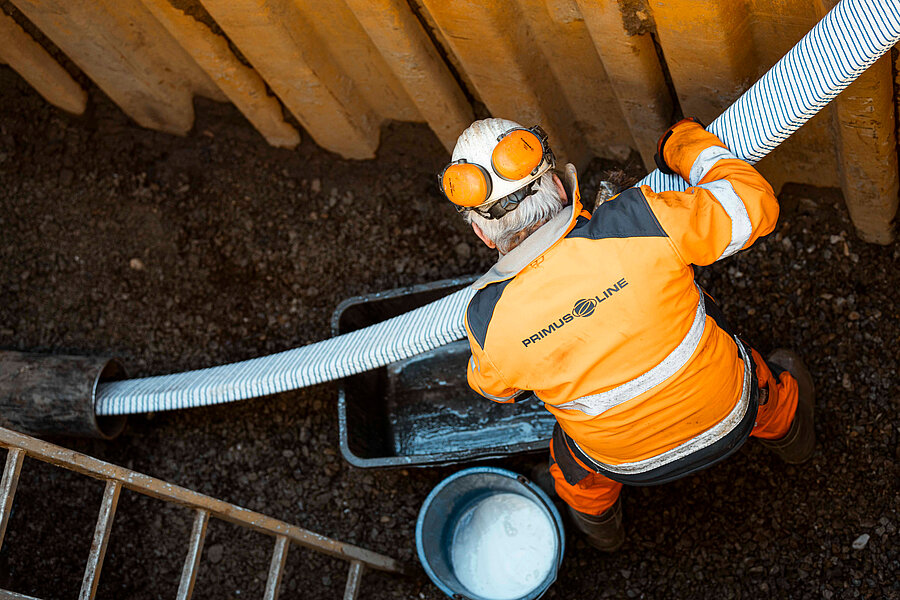
When pressure pipelines begin to deteriorate, replacing them through open-cut excavation can be expensive, disruptive, and time-consuming. Primus Line® provides a trenchless rehabilitation solution that restores the integrity of existing pipelines while minimizing excavation, traffic impacts, environmental disturbance, and downtime.
As part of our expanding portfolio of trenchless technologies, US Pipelining delivers complete Primus Line installations backed by decades of underground construction experience.
What is Primus Line?
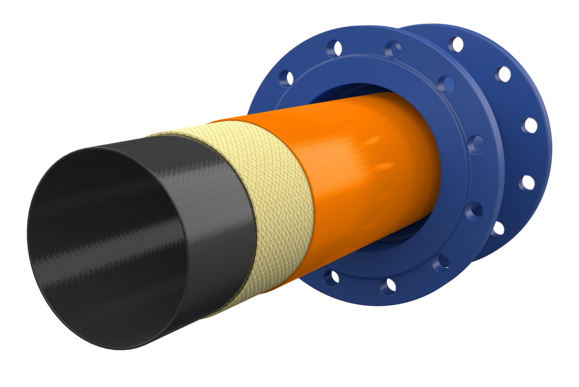
A flexible reinforced liner designed to rehabilitate existing pressure pipelines without removing the original pipe. The liner is inserted into the existing pipeline and connected using engineered end fittings to create a new, fully structural pressure pipe within the existing host pipe.
Benefit
- Minimal Excavation
- Faster Installation
- Long Service Life
- Cost-Effective Rehabilitation
- Environmentally Friendly
- Proven Technology
Applications
- Potable Water Transmission
- Force Mains
- Industrial Pipelines
- Fire Protection Systems
- Process Water
- Raw Water Transmission
- Utility Crossings
- Difficult-to-Access Locations
Why US Pipelining?
Successful trenchless rehabilitation requires more than quality materials, it requires experienced crews, detailed planning, and precise execution.
US Pipelining combines decades of trenchless construction expertise with industry-leading rehabilitation technologies to deliver dependable solutions for municipalities, utilities, and industrial clients.
Industries Served
Municipal Water Systems
Wastewater Utilities
Industrial Facilities
Energy & Utilities
Manufacturing
Commercial Infrastructure
Frequently Asked Questions
Cured-In-Place-Pipe, (CIPP), is an approved ASTM method and preferred method to rehabilitating cracked, broken and failed sanitary or storm sewer pipes. The process can be used to rehabilitate virtually any type of pipe including; Clay, Cast Iron, Steel, Orangeburg, PVC, ABS, HDPE, Concrete Pipe, tile, or Corrugated Pipe. CIPP liners are designed to be independently structurally strong, not relying on the host pipe for any structural strength contribution. CIPP liners can bridge offset pipe joints or gaps where sections of pipe are missing and stretch to fit irregular pipe sections.
Installation of a cured in place pipe liner results in a new ASTM certified stand-alone pipe within the existing deteriorated host pipe. The CIPP liner resin does not bound or is glued to the host pipe material. Instead, a mechanical lock is formed between the CIPP liner and the host pipe to prevent liner movement or shifting. Flexible liner impregnated with resin is pressed into cracks, joints, lateral connection flares, existing pipe curvatures, and pipe end flares to lock the liner into place. The liner fills the cracked, open portions of the pipe but does not over expand or balloon through the missing portion of pipe. Once hardened (cured), it forms a continuous, tight fitting, corrosion resistant and structural “new” pipe-within-a-pipe. With a 50 to 100-year design life, it will virtually never deteriorate under normal operational and environmental conditions.
A flexible “Dry Tube” manufactured from felt layers is used as the conduit. The finished tubes are coated with a permanently-bonded, continuous layer of polypropylene or polyethylene which is resistant to hydrolysis and chemical attack. In addition to having a high-quality felt tube, a pipe rehabilitation project requires the use of resins specifically developed and tested for project specific operating environments.
The cost savings to CIPP repair has both short and long-term advantages. The streamlined installation process reduces the cost of labor associated with traditional pipe repair. And, without the labor costs of digging, CIPP repair is much more inexpensive. Additionally, paving and restorative landscaping is usually needed after digging. This is one of the most expensive parts of pipe repair when you use excavation methods.
Looking for a Trenchless Rehabilitation Solution?
Whether you’re rehabilitating aging infrastructure or planning a new pressure pipeline project, our team can help determine if Primus Line is the right solution.